

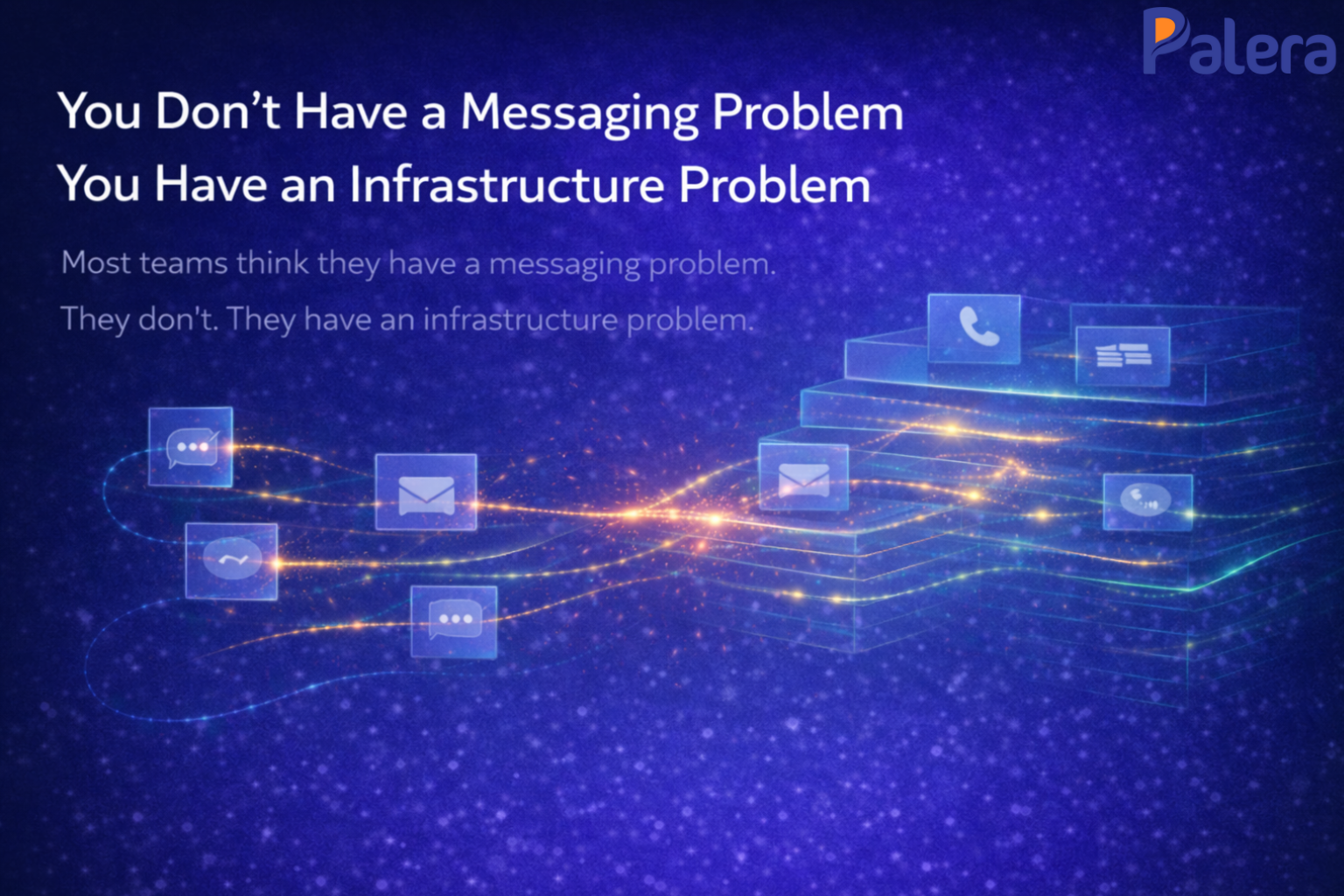




Most teams think they have a messaging problem.
They don’t.
They have an infrastructure problem.
The Difference Most Platforms Never Explain
Here’s the distinction that gets blurred far too often.
Messaging software:
- answers live chats
- sends texts
- replies on social
- sometimes enables two-way conversations
But everything is still siloed by channel.
So what do you actually get?
Fragments.
Moments.
Disconnected interactions.
No journey.
What Conversation Infrastructure Actually Does
Now compare that to conversation infrastructure.
Conversation infrastructure assumes:
- every channel feeds a shared memory
- conversations persist across time
- routing happens with full context
- automation reacts to journey signals
- intelligence improves with every interaction
This isn’t about handling messages.
It’s about understanding customers.
Why Messaging Tools Don’t Scale CX
Messaging tools are great at moving information.
They’re not designed to:
- preserve intent across channels
- compound learning over time
- support AI and humans from the same history
So teams end up stitching together:
- inboxes
- integrations
- dashboards
- workarounds
All to approximate continuity.
It works… until it doesn’t.
The Real Gap in the Market
There are thousands of messaging tools.
Very few platforms were built to:
- unify all conversations
- operate at enterprise scale
- support unlimited clients
- coordinate thousands of agents
- maintain a single system of record for conversations
That’s not a tooling problem.
That’s an architectural one.
Why Palera Exists
Palera was built for conversation infrastructure - not messaging.
A platform where:
- channels don’t own context
- systems don’t reset memory
- AI and humans work from the same history
Because CX doesn’t improve when messages move faster.
It improves when understanding compounds.
Final Thought
Channels move messages.
Infrastructure compounds understanding.
If your platform only does the first,
you’ll always struggle with the second.