

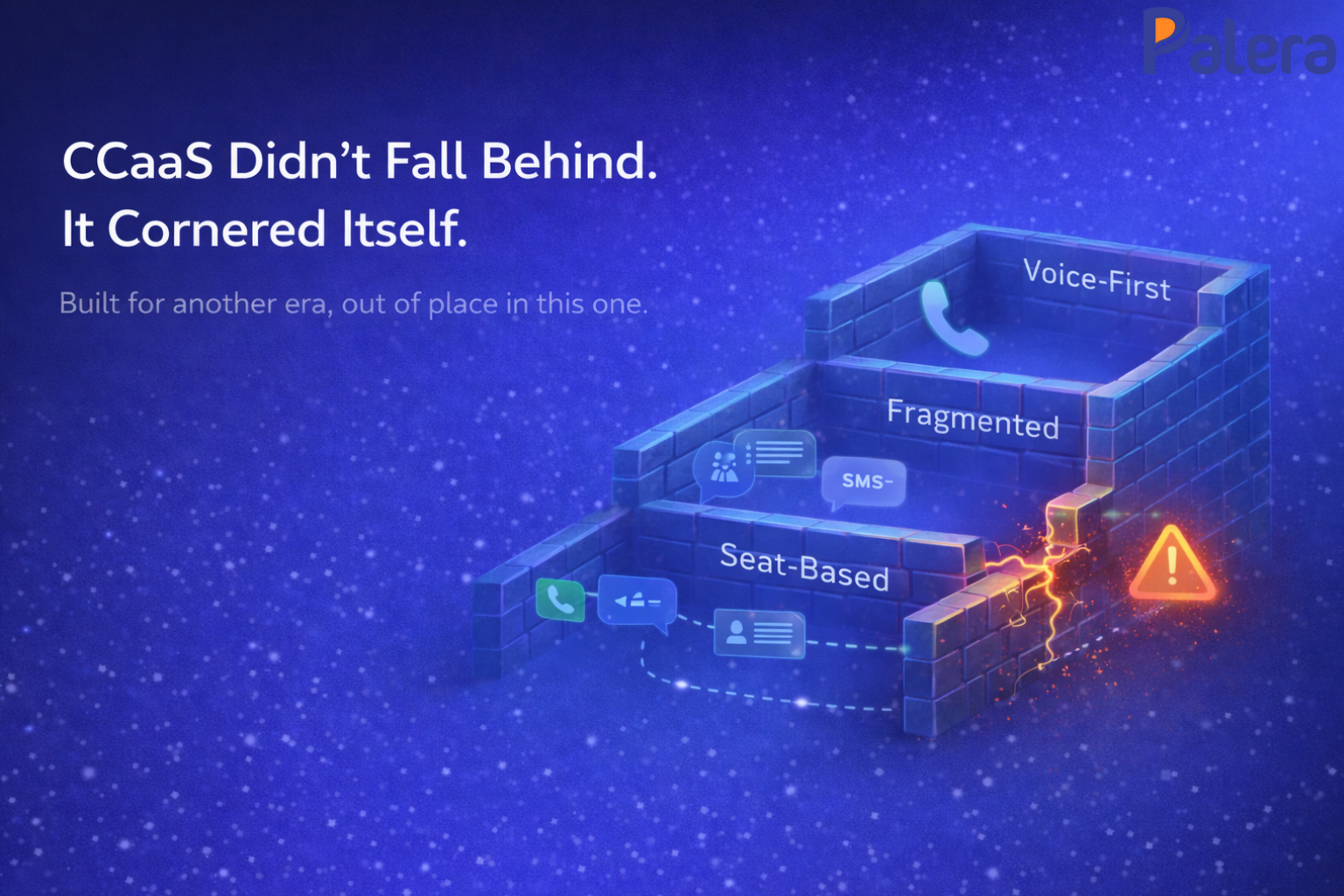




CCaaS didn’t “fall behind.”
It backed itself into a corner.
And now BPOs are paying the price.
How We Got Here
Most CCaaS platforms were built decades ago as voice-first systems.
At the time, that made sense.
But voice-first platforms weren’t designed to store full customer journeys - not without expensive add-ons, bolt-ons, and services.
So what do BPOs live with today?
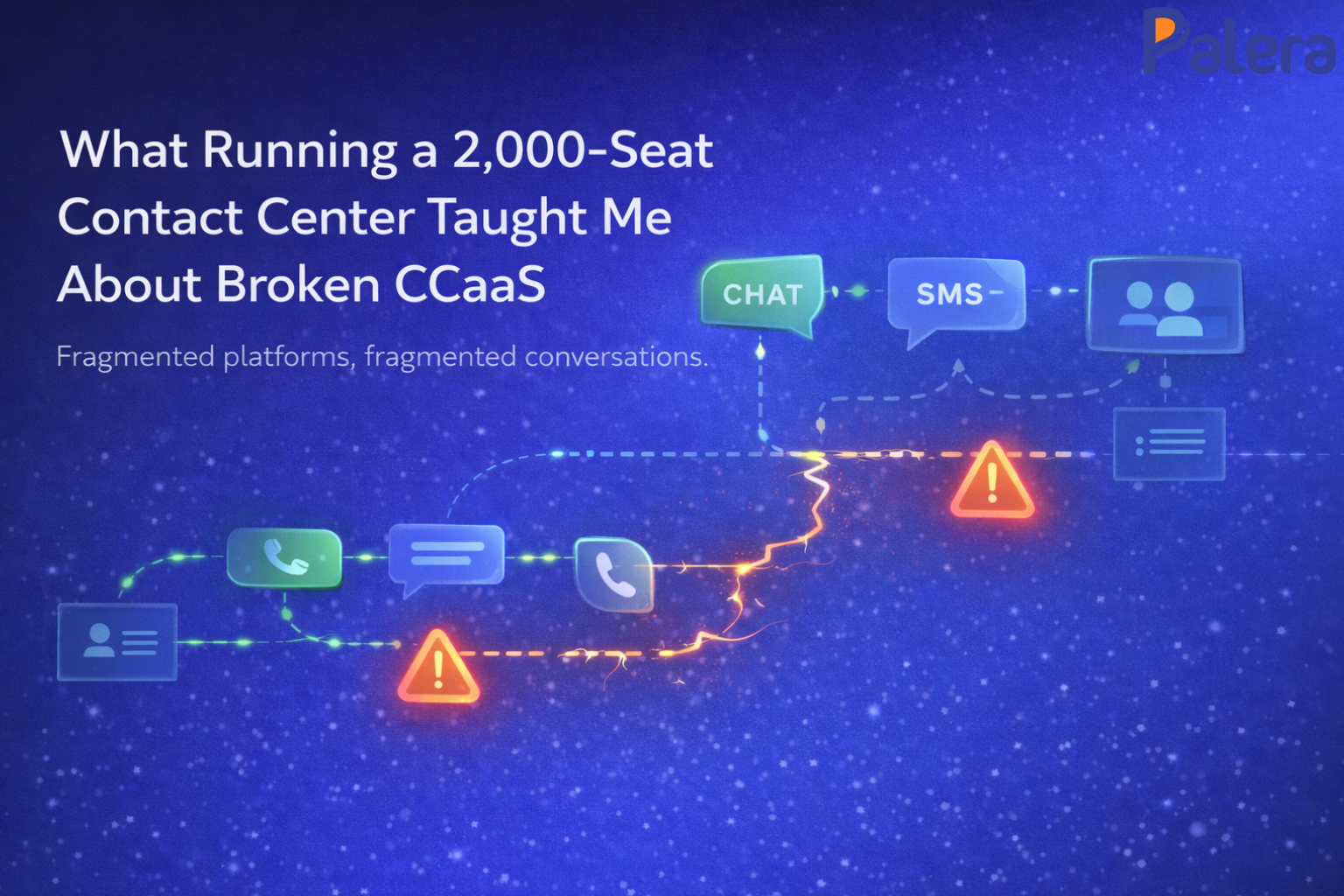
- Fragmented history
- Partial context
- Channels that don’t talk to each other
- AI that guesses instead of understands
- Margins crushed by seat-based economics
None of this feels like a single failure.
It just feels… normal.
The Vendor Pitch Sounds Familiar
When BPOs ask about AI, vendors say:
“We can help you transition.”
What they usually mean is:
“Pay us to customize the same foundation.”
More services.
More contracts.
More lock-in.
The architecture doesn’t change - only the cost does.
Why AI Exposes the Problem
AI doesn’t work on fragments.
It needs:
- Full conversation history
- Real-time context
- Flexible pricing
- Cost tied to output, not headcount
Trying to layer AI onto legacy CCaaS exposes the limits immediately.
The more AI you add, the more brittle the system becomes.
Where the Future Actually Points
The future isn’t seat-based.
It’s per-resolution, with AI and humans operating together.
That requires:
- Messaging-native architecture
- A unified conversation layer
- Pricing aligned with outcomes
- Infrastructure that compounds understanding
Not upgrades.
Not workarounds.
A different foundation.
Final Thought
Legacy CCaaS optimises vendor revenue.
Modern conversation infrastructure optimises BPO outcomes.
One locks you in.
The other lets you move.
What’s the one CCaaS limitation you’ve just accepted as “normal” - but shouldn’t?