

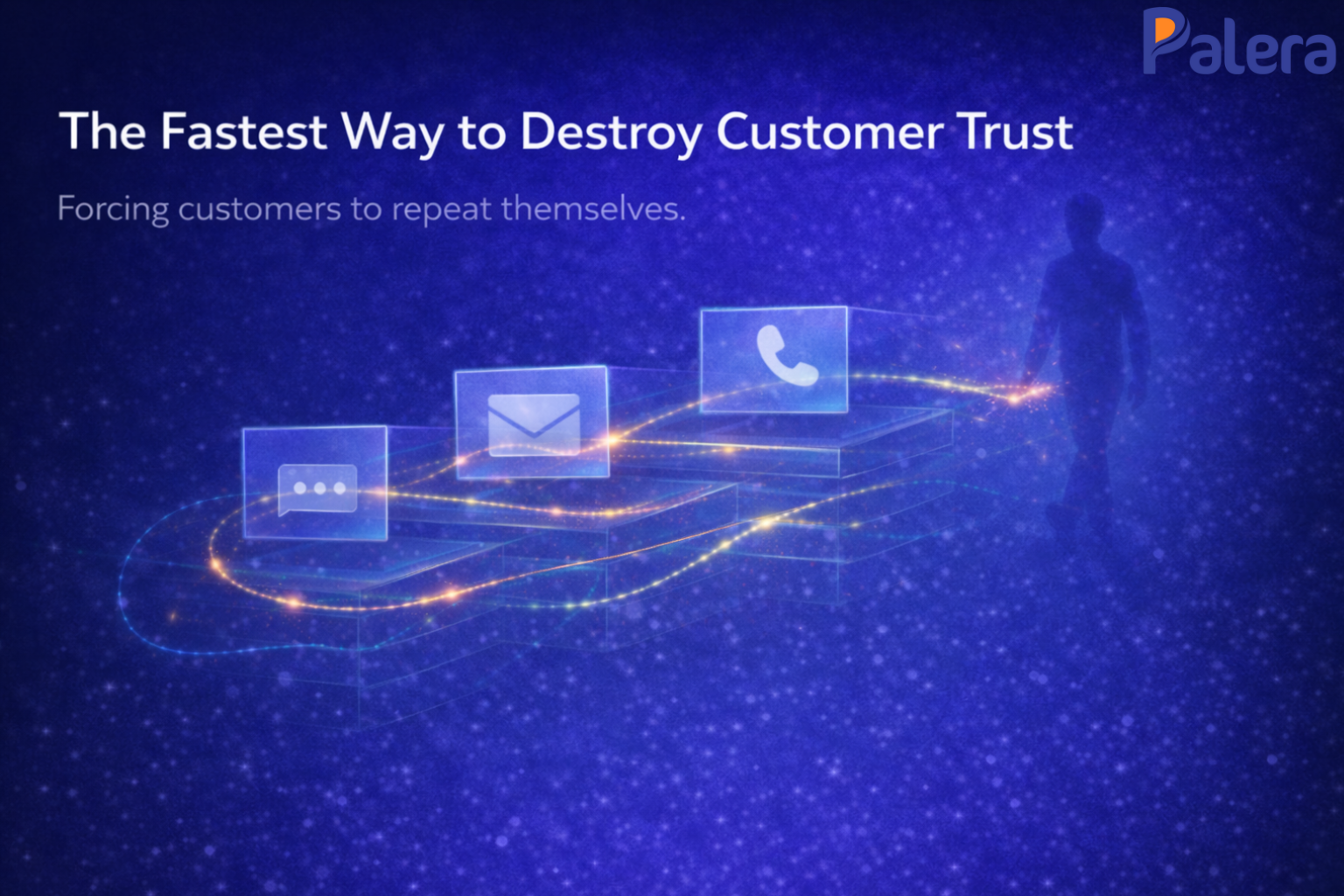




The fastest way to destroy trust with a customer
isn’t bad tone.
It’s making them repeat themselves.
The Moment Customers Check Out
I’ve watched this happen too many times.
A customer explains the issue on chat.
Then again over email.
Then again on the phone.
By the third time, they’re not angry yet.
They’re done.
Because every time someone has to repeat context,
they feel their time being wasted.
And when people feel their time is wasted,
they mentally downgrade the brand.
Not dramatically.
Permanently.
Where CX Actually Breaks
Here’s the part most teams miss:
Customer experience didn’t break at the agent level.
It broke before the agent ever touched the conversation.
When systems don’t carry context forward, agents are forced to:
- ask questions customers already answered
- retrace steps that already happened
- reconstruct history from fragments
What looks like a service problem is often a memory problem.
Siloed Channels Don’t Just Annoy Customers - They Blind You
When you can’t see the full conversation journey:
- you don’t know where friction actually starts
- you don’t know which channel failed first
- you don’t know what caused the escalation
So teams optimize the wrong things.
They adjust scripts.
They tweak SLAs.
They retrain agents.
They add more tooling.
But the root cause never changes, because it’s upstream:
the conversation is split.
That’s what siloed channels really do.
They don’t just frustrate customers -
they remove visibility from the entire CX operation.
The Trust Break Happens Before Anger
Customers don’t usually explode first.
They disengage.
The moment a customer repeats themselves,
something fundamental shifts:
They stop believing the system understands them.
They stop expecting it to work.
They start looking for an exit.
Trust isn’t lost in a single dramatic moment.
It leaks out with every reset.
Final Thought
If you want to protect customer trust, don’t start with tone guides.
Start with continuity.
Because the moment a customer has to repeat themselves,
trust is already gone.